
About Rocket
- Developer Tools
- Contact for pricing
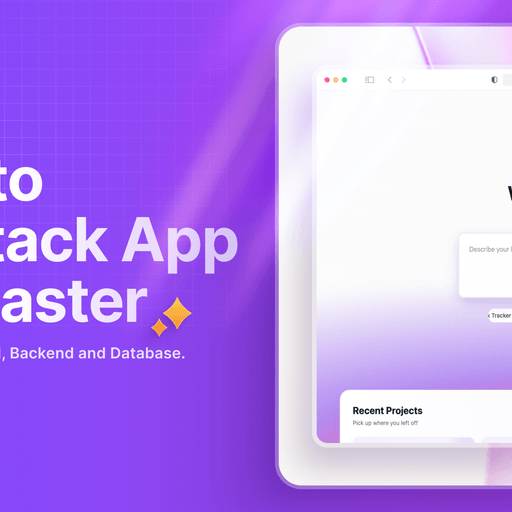
Rocket is an AI-powered platform that generates production-ready web and mobile applications from text prompts. Users can describe their app idea to automatically generate backend database schemas, authentication, API endpoints, UI design, and source code. The platform includes instant deployment options and support for multiple frameworks and templates.
Written by our automated systems from Rocket's own description and website. It is a summary, not a scored review — we publish no rating, score or percentage we did not measure ourselves. The maker of this listing can edit or remove it.
What is Rocket?
Rocket is an AI-powered platform that builds full-stack web and mobile applications from natural language prompts. It takes a single description of an app idea and generates the backend, database schemas, authentication, API endpoints, UI/UX design, and source code. The product is aimed at creators and developers looking to bypass traditional boilerplate and tutorials to launch applications quickly.
Rocket key features
- Generates full-stack web and mobile applications from a single natural language prompt
- Performs market research, problem contextualization, and UI/UX design automatically
- Writes SEO-friendly copy and code in a choice of framework
- Auto-generates database schemas, authentication, and security configurations
- Creates API endpoints and provisions cloud infrastructure for payment gateways and other integrations
- Handles deployment tasks including code optimization, bundling, and server configuration
- Provides curated templates including landing pages, web apps, brand websites, internal tools, and mobile apps
Rocket pros and cons
Pros
- Generates entire full-stack applications with backends and integrations from a single text prompt rather than requiring page-by-page prompting
- Includes automated market research, feature selection, UI/UX design, and SEO-friendly copy generation
- Offers instant deployment pipelines with code optimization, server configuration, and GitHub synchronization
- Provides curated templates that can reduce token consumption by up to 80 percent
Cons
- Pricing is not published on the page and requires contacting the company
- The platform's specific supported frameworks are not detailed by name in the available text
- Open source status is not recorded
Who Rocket is for
Rocket fits creators, developers, and teams building side projects, internal tools, landing pages, and enterprise web or mobile applications who want to skip manual boilerplate setup. It is a poor fit for users who want to write every line of code manually or configure every architectural component from scratch without AI intervention.
Rocket pricing
The listing states you have to contact them for pricing. No specific tier names, pricing models, or dollar amounts are published on the page.
What makes Rocket different
Unlike alternatives that require users to prompt separately for every individual page and feature, Rocket aims to generate a whole functional application from a single prompt. It researches the market, designs the interface, writes the copy, and sets up the backend simultaneously rather than incrementally.
Is Rocket worth trying?
Rocket is worth trying for developers, founders, and creators who want to test full-stack app concepts quickly without writing boilerplate code or manually provisioning infrastructure. The platform offers a streamlined prompt-to-deployment pipeline that includes backend setup and GitHub synchronization. However, because public pricing details are not provided on the site, buyers will need to contact the company directly to understand cost models before committing.
Rocket alternatives
The developer tools listed here closest to Rocket, by shared categories and tags and by how alike the two descriptions read. Not a ranking against Rocket — open one and judge for yourself.
 SoftgenBuild full-stack web apps from text prompts
 CapacityTurn your idea into a real app using natural language
 VULKAI app builder for full-stack apps and 3D websites
 BerrryMake tiny web apps with AI
 shiply.nowPublish any app in one call with a backend included
 StunningBuild fullstack web applications 10x faster with AI
Be the first to comment